How to Get More Sales Ecommerce: The Ultimate Guide
how to get more sales ecommerce

How to Get More Sales Ecommerce: The Ultimate Guide

Master the art of driving sustainable growth and significantly increasing your online store's revenue.

Start Selling More Today

Key Takeaways

  • ✓ Personalization can increase sales by 20% on average.
  • ✓ Mobile commerce now accounts for over 50% of all e-commerce sales.
  • ✓ Customer retention is 5x cheaper than customer acquisition.
  • ✓ High-quality product images and videos boost conversions by up to 30%.

How It Works

1
Optimize Your Product Experience

Ensure your product listings are compelling, featuring high-quality visuals, detailed descriptions, and transparent pricing. A seamless product experience is foundational to conversion.

2
Drive Targeted Traffic

Implement multi-channel marketing strategies including SEO, paid ads, and social media to attract your ideal customer. Focus on quality over quantity for higher conversion potential.

3
Enhance User Experience (UX)

Streamline your website navigation, checkout process, and mobile responsiveness. A friction-free shopping journey significantly reduces cart abandonment.

4
Foster Customer Loyalty

Engage with customers post-purchase through email marketing, loyalty programs, and exceptional support. Repeat customers are a powerful source of sustained sales.

Mastering Your Product Presentation for Increased Conversions

Muslim woman organizing paper bags with shoes in a studio setup. Perfect for ecommerce or lifestyle imagery. Photo: PNW Production / Pexels
In the competitive landscape of ecommerce, your product is the star of the show. How you present it dictates whether a potential customer clicks 'Add to Cart' or navigates away. To truly understand how to get more sales ecommerce, you must first perfect your product presentation. This isn't just about pretty pictures; it's about crafting an irresistible narrative that addresses customer needs, highlights benefits, and builds trust. Begin with high-resolution, professional imagery and video. Customers cannot physically touch or inspect products online, so visuals must bridge this gap. Include multiple angles, lifestyle shots, and close-ups that showcase texture and detail. Consider 360-degree views or augmented reality features for a truly immersive experience. These visual aids directly impact perceived value and can significantly reduce return rates. Beyond visuals, your product descriptions are critical. Move beyond generic feature lists and focus on benefits. How does this product solve a problem for the customer? How will it improve their life or fulfill a desire? Use compelling, persuasive language that resonates with your target audience. Incorporate relevant keywords naturally to improve search engine visibility, but always prioritize readability and engagement for the human reader. Include technical specifications clearly, but separate from the benefit-driven narrative. Social proof is another powerful element. Integrate customer reviews and ratings prominently on product pages. A recent study found that 93% of consumers say online reviews impact their purchase decisions. Encourage customers to leave reviews through post-purchase email sequences or incentives. Showcase user-generated content (UGC) like customer photos or videos, as this builds authenticity and trust far more effectively than brand-produced content alone. Think about how to build a successful ecommerce brand from the ground up, and product presentation will always be at its core. Transparent pricing, clear shipping policies, and easily accessible FAQs on product pages further instill confidence and remove potential barriers to purchase. Remember, every element on your product page should work synergistically to convince the customer that this is exactly what they need.

Driving High-Quality Traffic and Optimizing Conversion Funnels
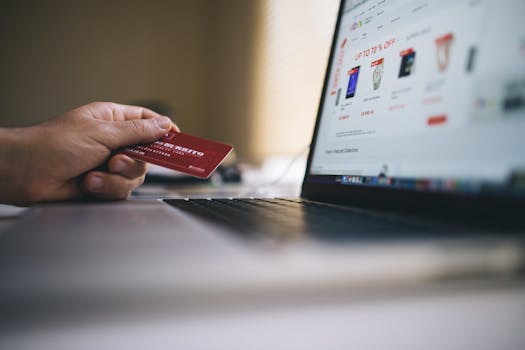
Person holding a credit card while shopping online on a laptop, indicating ecommerce transactions. Photo: Negative Space / Pexels
Attracting visitors to your online store is only half the battle; ensuring those visitors convert into paying customers is where the real challenge lies. To effectively learn how to get more sales ecommerce, you need a robust strategy for both traffic generation and conversion rate optimization (CRO). Start by diversifying your traffic sources. Relying on a single channel, such as paid ads, can be risky and unsustainable. Invest in Search Engine Optimization (SEO) to improve your organic rankings. This means conducting thorough keyword research, optimizing product pages and blog content, building high-quality backlinks, and ensuring your site has excellent technical SEO. Organic traffic tends to have a higher conversion rate because users are actively searching for solutions your products might provide. Complement SEO with targeted paid advertising campaigns on platforms like Google Ads, Facebook, and Instagram. These platforms offer granular targeting options, allowing you to reach specific demographics, interests, and behaviors. A/B test ad copy, visuals, and landing pages continuously to maximize your return on ad spend (ROAS). Email marketing remains one of the most effective channels for both acquisition and retention. Build an email list through pop-ups, lead magnets, and checkout opt-ins. Segment your audience and send personalized campaigns, including welcome sequences, abandoned cart reminders, promotional offers, and product recommendations. Social media marketing is also crucial for brand building and direct sales. Engage with your audience, run contests, collaborate with influencers, and utilize shoppable posts to shorten the path to purchase. Once traffic arrives, the focus shifts to your conversion funnel. Analyze user behavior on your site using tools like Google Analytics or heatmaps. Identify drop-off points in your customer journey, from browsing to checkout. Is your navigation intuitive? Is your site speed optimal? Are there too many steps in the checkout process? A cumbersome checkout is a primary reason for abandoned carts. Offer multiple payment options, guest checkout, and clearly display shipping costs upfront. Personalized recommendations, exit-intent pop-ups, and live chat support can also significantly boost conversion rates. Continuously test different elements of your website – headlines, call-to-action buttons, page layouts – to identify what resonates best with your audience. Understanding user psychology and removing friction are paramount to turning visitors into loyal customers.

Building Customer Loyalty and Maximizing Lifetime Value (LTV)

Person holding a credit card while shopping online on a laptop, indicating ecommerce transactions. Photo: Negative Space / Pexels
While acquiring new customers is essential for growth, retaining existing ones is often more profitable and a cornerstone of how to get more sales ecommerce. Loyal customers not only make repeat purchases but also act as brand advocates, driving valuable word-of-mouth marketing. Focusing on Customer Lifetime Value (LTV) rather than just individual transactions is a strategic shift that yields significant long-term benefits. Start by providing exceptional customer service. This goes beyond just answering queries; it means being proactive, empathetic, and efficient. Offer multiple support channels like live chat, email, and phone. Resolve issues quickly and go the extra mile to delight customers. A positive support experience can turn a disgruntled customer into a loyal one. Implement a robust email marketing strategy for post-purchase engagement. Don't just send order confirmations; follow up with thank-you notes, product care tips, requests for reviews, and personalized recommendations for complementary products. Segment your email list based on purchase history and browsing behavior to send highly relevant content. For instance, if a customer bought running shoes, suggest running apparel or accessories in a follow-up email. Loyalty programs are another powerful tool. Offer points for purchases, referrals, and social media shares that customers can redeem for discounts, exclusive products, or early access to sales. Tiers in loyalty programs can incentivize higher spending and deeper engagement. Creating a sense of community around your brand through social media groups, forums, or exclusive content can also foster strong bonds. Personalization extends beyond email. Use website personalization tools to display dynamic content, product recommendations, and special offers based on a visitor's past behavior and preferences. This creates a more tailored and relevant shopping experience, making customers feel valued and understood. Regularly solicit feedback from customers through surveys or direct outreach. Use this feedback to improve products, services, and the overall customer experience. Showing customers that their opinions matter strengthens their connection to your brand. Remember, building a strong community around your brand and ensuring customer satisfaction are key to long-term success, as explored in ecommerce marketing strategies. By consistently nurturing customer relationships, you transform one-time buyers into repeat purchasers and powerful brand ambassadors, significantly boosting your overall sales volume and profitability.

Key Strategies for Rapid Ecommerce Sales Growth

Top view of a shopping cart and bag on a blue background, ideal for retail themes. Photo: Nataliya Vaitkevich / Pexels
To accelerate your ecommerce sales, a multi-faceted approach focusing on both immediate impact and sustained growth is crucial. Here are some actionable strategies: * **Optimize for Mobile First**: With over half of all ecommerce traffic coming from mobile devices, a responsive, fast, and user-friendly mobile experience is non-negotiable. Test your site thoroughly on various devices. * **Leverage Urgency and Scarcity**: Use limited-time offers, countdown timers, and low stock alerts to encourage immediate purchases. Phrases like 'Only X left in stock!' or 'Sale ends in X hours!' can be powerful motivators. * **Implement One-Click Checkout**: Reduce friction at the final stage of purchase. Offering express checkout options (e.g., Shop Pay, PayPal, Apple Pay) can significantly decrease cart abandonment rates. * **Utilize Retargeting Ads**: Target users who have visited your site or added items to their cart but didn't complete a purchase. These ads serve as a powerful reminder and can bring back interested customers. * **Offer Free Shipping (with conditions)**: Free shipping is a major purchasing incentive. Consider offering it above a certain order value to encourage larger basket sizes, or build shipping costs into your product pricing. * **Guest Checkout Option**: While encouraging account creation is good for data, forcing it can deter first-time buyers. Always offer a guest checkout option to simplify the process. * **A/B Test Everything**: From product page layouts to email subject lines and CTA button colors, continuously test different elements to understand what performs best with your audience. Data-driven decisions are key. * **Integrate Live Chat**: Provide immediate support to customers with questions or concerns during their shopping journey. This can often resolve issues before they lead to cart abandonment. * **Run Seasonal Promotions**: Align your marketing efforts with holidays, seasonal trends, and special events. Create themed campaigns that offer relevant products and discounts. * **Focus on Upselling and Cross-selling**: Recommend higher-priced alternatives (upselling) or complementary products (cross-selling) at strategic points in the customer journey, such as on product pages or during checkout. By systematically implementing these strategies and continuously analyzing their impact, you can create a dynamic environment that consistently drives more sales for your ecommerce business.

Comparison

Strategy ElementHigh Impact (Short-Term)High Impact (Long-Term)Cost Efficiency
Product Page OptimizationHigh
Paid AdvertisingMedium
Email Marketing AutomationHigh
Customer Loyalty ProgramsMedium
Mobile ResponsivenessHigh
SEO (Organic Traffic)High

What Readers Say

"This guide completely transformed how I approach my online store. The section on product presentation alone led to a 15% increase in conversions in just two months. Highly recommend for anyone looking to get more sales ecommerce!"

Sarah J. · Austin, TX

"I've been struggling to scale my ecommerce business, but the insights on driving quality traffic and LTV were game-changers. My customer retention rates are finally improving, directly impacting my bottom line."

Mark D. · Miami, FL

"Following the advice on optimizing my checkout process and implementing abandoned cart emails, I recovered nearly 20% of previously lost sales. This guide is an absolute goldmine for how to get more sales ecommerce."

Jessica L. · Seattle, WA

"While some of the concepts were familiar, the depth of explanation and actionable steps provided a fresh perspective. I particularly appreciated the focus on mobile optimization, which has started to show positive results."

David R. · Chicago, IL

"As a new ecommerce entrepreneur, this guide was invaluable. It broke down complex strategies into easy-to-understand steps. My first month's sales exceeded expectations thanks to these practical tips."

Emily C. · Denver, CO

Frequently Asked Questions

What is the most effective strategy to immediately get more sales ecommerce?

While long-term strategies are crucial, implementing targeted retargeting campaigns for abandoned carts, optimizing your product pages with high-quality visuals and compelling descriptions, and offering limited-time, clear promotions are often the quickest ways to see an immediate uptick in sales. Reducing checkout friction is also key.

Is it better to focus on acquiring new customers or retaining existing ones for ecommerce growth?

Both are vital, but retaining existing customers is generally more cost-effective. Repeat customers have a higher average order value, convert more frequently, and are more likely to refer others. A balanced approach that prioritizes excellent customer experience to foster loyalty while also investing in targeted acquisition is ideal.

How can I improve my ecommerce conversion rate without spending more on ads?

Focus on Conversion Rate Optimization (CRO) strategies. This includes improving website speed and mobile responsiveness, simplifying your checkout process, adding social proof (reviews), enhancing product descriptions and images, offering guest checkout, and providing live chat support to address customer queries instantly.

What's the typical cost associated with implementing these ecommerce sales strategies?

Costs vary widely. Many strategies like improving SEO, optimizing product descriptions, and enhancing customer service can be done with internal resources or low-cost tools. Paid advertising, advanced personalization software, and professional photography will incur higher costs. The key is to start with high-impact, low-cost options and scale as you see results.

How does personalization impact ecommerce sales compared to generic marketing?

Personalization significantly outperforms generic marketing. Tailoring product recommendations, email content, and website experiences based on user behavior can increase sales by an average of 20%. It makes customers feel understood and valued, leading to higher engagement, conversion rates, and repeat purchases compared to a one-size-fits-all approach.

Who should implement these strategies for their ecommerce business?

These strategies are suitable for any ecommerce business, from small startups to established enterprises, across various niches. Whether you're selling physical products, digital goods, or services, the principles of optimizing product experience, driving targeted traffic, and fostering customer loyalty are universally applicable for increasing sales.

What are the biggest risks if I don't focus on increasing ecommerce sales?

Neglecting sales growth can lead to stagnation, decreased market share, inability to cover operational costs, and ultimately, business failure. In a dynamic ecommerce environment, continuous optimization and adaptation are crucial to staying competitive and ensuring long-term viability.

What future trends should I consider to keep getting more sales ecommerce?

Look towards AI-driven personalization, augmented reality (AR) for product visualization, voice commerce optimization, sustainable and ethical sourcing, and the increasing importance of social commerce (selling directly through social media platforms). Staying ahead of these trends will position your business for future success.

Ready to transform your online store and dramatically increase your revenue? Implement the powerful strategies outlined in this guide and discover how to get more sales ecommerce, building a thriving, sustainable business for years to come. Start your journey to unprecedented growth today.

Topics: how to get more sales ecommerceecommerce sales strategiesincrease online store revenueboost ecommerce conversionsecommerce growth hacks
Leo List
Brampton weed
Adultwork EstrelaBet Vai de Bet R7 Bet Betão Galera Bet Rainbet Bet9ja Shop SportyBet BetKing Sisal Loto Foot Hollywoodbets YesPlay Odibets RushBet Jugabet BetWarrior BetCity MSport betPawa Fortebet