Boost Sales with Top Ecommerce Fulfillment Services USA
ecommerce fulfillment services usa

Boost Sales with Top Ecommerce Fulfillment Services USA

Streamline your online business, save time, and deliver exceptional customer experiences with expert US fulfillment.

Find Your Solution

Key Takeaways

  • ✓ US ecommerce sales are projected to reach over $1.6 trillion by 2027.
  • ✓ Fast, affordable shipping is a top factor for 80% of online shoppers.
  • ✓ 3PL (Third-Party Logistics) fulfillment can reduce shipping costs by up to 25%.
  • ✓ 92% of consumers say delivery experience impacts their loyalty.

How It Works

1
Inventory Receiving & Storage

Your products are shipped to the fulfillment center, where they are inspected, cataloged, and stored securely. Advanced inventory management systems track every item.

2
Order Integration & Processing

When a customer places an order on your website, it's automatically sent to the fulfillment center. The system identifies the items, quantities, and shipping details.

3
Picking, Packing & Shipping

Warehouse staff pick the ordered items, pack them securely with appropriate materials, and prepare them for shipment. Labels are generated, and packages are dispatched via carriers.

4
Returns Management & Reporting

Fulfillment centers can handle returns, restocking, and provide detailed reports on inventory levels, shipping statuses, and order history. This gives you full visibility.

Understanding the Landscape of Ecommerce Fulfillment Services USA
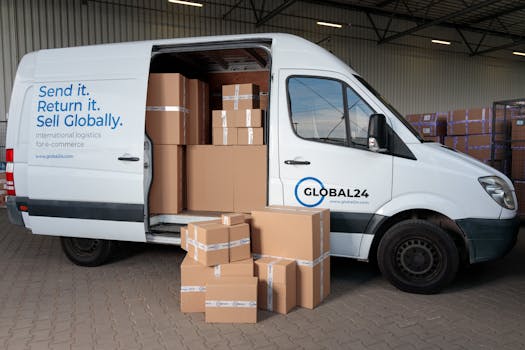
Delivery van loaded with cardboard boxes for global shipping logistics. Photo: Wojciech Kotlicki / Pexels
In the dynamic world of online retail, the journey from a customer clicking 'buy' to receiving their package is fraught with complexities. For businesses operating in the United States, mastering this process is not just about efficiency; it's about competitive advantage, customer satisfaction, and ultimately, sustainable growth. Ecommerce fulfillment services in the USA provide the critical infrastructure and expertise to manage this entire post-purchase process. Essentially, these services involve storing your inventory, processing orders, picking and packing products, and shipping them directly to your customers. Beyond the basics, they often include value-added services like returns management, kitting, and custom packaging. The American market presents unique challenges and opportunities. Its vast geographical spread necessitates strategically located fulfillment centers to ensure rapid delivery across different regions. Consumer expectations for fast, often free, shipping have skyrocketed, fueled by giants like Amazon. Small to medium-sized businesses (SMBs) and even larger enterprises often lack the internal resources, warehousing space, or shipping rate leverage to meet these demands effectively on their own. This is where third-party logistics (3PL) providers specializing in ecommerce fulfillment become indispensable partners. They offer economies of scale, advanced technology, and a network of facilities that individual businesses can rarely replicate. By outsourcing these operations, businesses can pivot their focus back to core competencies like product development, marketing, and customer engagement, rather than getting bogged down in logistical nightmares. Choosing the right partner from the myriad of ecommerce fulfillment services in the USA is a strategic decision that impacts everything from your bottom line to your brand reputation. A well-chosen 3PL can significantly reduce operational costs, optimize shipping times, minimize errors, and scale seamlessly with your business's growth. Conversely, a poor choice can lead to delayed deliveries, damaged goods, unhappy customers, and ultimately, lost sales. The landscape is rich with options, ranging from generalist 3PLs to highly specialized providers catering to specific niches, product types (e.g., cold storage, oversized items), or sales channels. Understanding the nuances of these services and how they align with your business model is the first step towards unlocking true operational excellence. This foundational understanding allows businesses to make informed decisions that drive efficiency and enhance the customer experience in a highly competitive market. For more insights into the broader context of online retail, explore our resources on ecommerce trends.

Key Benefits of Partnering with US-Based Fulfillment Centers

The advantages of leveraging ecommerce fulfillment services in the USA extend far beyond simply delegating tasks. One of the most significant benefits is improved shipping speed and reduced costs. By utilizing a network of strategically located fulfillment centers across the US, products can be stored closer to end-customers, drastically cutting down transit times and enabling competitive shipping options like 2-day or even next-day delivery. This geographical advantage directly translates into higher customer satisfaction and repeat business, as modern consumers prioritize swift delivery. Furthermore, 3PLs often have high-volume shipping agreements with major carriers (UPS, FedEx, USPS, DHL), allowing them to secure discounted rates that individual businesses cannot, leading to substantial savings on shipping expenses. Another crucial benefit is scalability and flexibility. As an ecommerce business grows, so do its fulfillment needs. Rather than investing in additional warehouse space, hiring more staff, and purchasing expensive equipment, businesses can seamlessly scale their operations up or down with a fulfillment partner. During peak seasons, like Black Friday or Cyber Monday, a 3PL can effortlessly handle spikes in order volume without overwhelming your internal team or requiring temporary hires. Conversely, during slower periods, you're not burdened by underutilized resources. This flexibility is invaluable for managing fluctuating demand and maintaining a lean operational structure. Operational efficiency and reduced overhead are also significant draws. Outsourcing fulfillment eliminates the need for your business to lease or purchase warehouse space, manage inventory, hire and train warehouse staff, or invest in costly warehouse management systems (WMS). These fixed costs are converted into variable costs, meaning you only pay for the services you use, which can significantly improve cash flow and profitability. Moreover, professional fulfillment centers are equipped with advanced technology and optimized processes that lead to fewer picking and packing errors, less product damage, and more accurate inventory tracking. This level of precision and efficiency is difficult and expensive to achieve in-house. Finally, partnering with expert ecommerce fulfillment services in the USA allows business owners to reclaim valuable time and resources. Instead of spending hours on packing boxes, printing labels, and managing logistics, you can redirect your efforts towards core business activities such as marketing, product development, and customer service. This strategic reallocation of resources can accelerate growth and innovation. The peace of mind that comes from knowing your logistics are handled by professionals allows for greater focus on what truly drives your business forward, enhancing your competitive posture in the crowded ecommerce marketplace.

Choosing the Right Ecommerce Fulfillment Partner in the USA

Selecting the ideal ecommerce fulfillment services in the USA is a critical decision that demands careful consideration. It's not a one-size-fits-all scenario, as the 'best' partner depends heavily on your specific business needs, product type, order volume, and customer base. The evaluation process should begin with a thorough understanding of your current and projected logistics requirements. Consider your average daily order volume, the seasonality of your sales, the size and weight of your products, any special handling instructions (e.g., fragile, temperature-sensitive), and your target delivery times. One of the primary factors to assess is the fulfillment provider's network of warehouse locations. A distributed network across the US can significantly reduce shipping costs and transit times, especially for businesses with a nationwide customer base. Look for providers with facilities in key regions (e.g., East Coast, West Coast, Midwest, South) to optimize delivery zones. Next, delve into their technological capabilities. A robust Warehouse Management System (WMS) that seamlessly integrates with your existing ecommerce platform (e.g., Shopify, Magento, WooCommerce) is non-negotiable. This integration ensures real-time order syncing, inventory visibility, and accurate tracking information, which are vital for efficient operations and customer transparency. Advanced WMS features can also include automated reordering, demand forecasting, and detailed reporting. Pricing structure and transparency are equally important. Fulfillment costs typically include receiving, storage, picking and packing, and shipping. Some providers charge additional fees for kitting, custom packaging, returns processing, or minimum order volumes. Request a detailed breakdown of all potential costs and compare them across multiple providers. Be wary of hidden fees that could inflate your expenses unexpectedly. Customer service and account management are also crucial. You'll want a partner that offers dedicated support, clear communication channels, and a proactive approach to problem-solving. Read reviews and ask for references to gauge their responsiveness and reliability. Finally, consider their expertise in your specific industry or product type. If you sell apparel, a provider experienced in garment handling and returns might be preferable. If you deal with fragile items, ensure they have proven methods for secure packaging. Evaluate their scalability to ensure they can grow with your business and handle peak demand without compromising service quality. By meticulously evaluating these factors, you can forge a partnership that optimizes your supply chain, enhances customer satisfaction, and propels your business forward. For a deeper dive into improving your online store's performance, consider exploring strategies for ecommerce conversion rate optimization.

Common Pitfalls and Best Practices in Ecommerce Fulfillment

Navigating the complexities of ecommerce fulfillment in the USA can be challenging, and several common pitfalls can derail even the most promising online businesses. Understanding these traps and adopting best practices is essential for sustained success. One major pitfall is underestimating the true cost of in-house fulfillment. Many businesses initially believe they can save money by handling logistics themselves, only to discover that the hidden costs of warehouse space, labor, equipment, shipping software, and lost time far outweigh the perceived savings. Another common mistake is choosing a fulfillment partner solely based on price, neglecting crucial factors like service quality, technological integration, and scalability. A cheap provider might lead to errors, delays, and poor customer experiences, ultimately costing more in lost sales and reputational damage. Poor inventory management is another significant issue. Without accurate, real-time inventory data, businesses face stockouts, overselling, or holding excess inventory, all of which impact profitability and customer satisfaction. Not having a clear returns management strategy can also be detrimental. Returns are an inevitable part of ecommerce, and a smooth, efficient return process is vital for customer loyalty. A convoluted or slow returns process can deter repeat purchases and damage your brand image. **Best Practices for Optimal Ecommerce Fulfillment:** * **Diversify Fulfillment Locations:** For nationwide reach, utilize a 3PL with multiple strategically located warehouses across the US. This reduces shipping zones, lowers costs, and speeds up delivery times for most customers. * **Integrate Technology Seamlessly:** Ensure your fulfillment partner's WMS integrates flawlessly with your ecommerce platform. This automation prevents manual errors, provides real-time data, and streamlines the entire order-to-delivery process. * **Negotiate Service Level Agreements (SLAs):** Clearly define expectations regarding order processing times, shipping accuracy, inventory discrepancy rates, and communication protocols. An SLA provides accountability and clarity. * **Prioritize Data and Analytics:** Leverage the reporting features of your 3PL. Analyze shipping costs, delivery times, return rates, and inventory turnover to identify areas for improvement and make data-driven decisions. * **Optimize Packaging:** Work with your fulfillment partner to ensure products are packed efficiently and securely, using appropriate materials. Consider branded packaging for an enhanced unboxing experience. * **Streamline Returns Process:** Implement a clear, customer-friendly returns policy and ensure your 3PL can execute it efficiently. Fast and easy returns can turn a potentially negative experience into a positive one. * **Regular Communication and Review:** Maintain open lines of communication with your fulfillment partner. Schedule regular reviews to discuss performance, address challenges, and plan for future growth or seasonal peaks. * **Understand Pricing Structures:** Fully comprehend all fees associated with your fulfillment service to avoid surprises. Ask for examples of invoices and clarify any potential variable costs upfront. By avoiding these common pitfalls and implementing these best practices, businesses can transform their ecommerce fulfillment from a logistical headache into a powerful competitive advantage, ensuring efficient operations and delighted customers across the USA.

Comparison

FeatureDedicated 3PL PartnerIn-House FulfillmentDropshipping Model
Initial InvestmentLow to ModerateHighVery Low
ScalabilityExcellentChallengingExcellent
Shipping Speed (USA)Fast (Multi-node)Variable (Single node)Variable (Supplier dependent)
Inventory ControlHigh (Via WMS)HighLow
Operational ExpertiseHighRequires LearningNone
Cost Efficiency for Volume
Brand ControlHigh (Custom Packaging)HighLow
Returns ManagementProfessionalRequires ResourcesComplex

What Readers Say

"Switching to a dedicated ecommerce fulfillment service in the USA was a game-changer for my small business. Our shipping times dropped dramatically, and customers are consistently happy. Highly recommend for growth!"

Sarah J. · Austin, TX

"We've been using a 3PL for our US orders for over a year, and the efficiency is incredible. Inventory accuracy is 99%, and we've saved a fortune on shipping costs compared to our previous setup."

Mark D. · Miami, FL

"Our sales increased by 30% after outsourcing to ecommerce fulfillment services in the USA. We could focus on marketing instead of packing boxes, leading to direct business growth and happier customers."

Emily R. · Seattle, WA

"While the initial setup with our fulfillment partner had a few minor hiccups, their ongoing support and performance have been excellent. It's a solid investment for any serious ecommerce business."

David L. · Chicago, IL

"As a startup, we needed a scalable solution. Our chosen ecommerce fulfillment service in the USA has allowed us to grow without needing our own warehouse, making expansion much easier and more affordable."

Jessica M. · Denver, CO

Frequently Asked Questions

What are ecommerce fulfillment services USA?

Ecommerce fulfillment services in the USA are third-party logistics (3PL) providers that handle the entire post-purchase process for online businesses, including storing inventory, processing orders, picking and packing products, and shipping them to customers across the United States. They aim to streamline operations and enhance delivery speed.

Is it cheaper to do fulfillment in-house or outsource to a 3PL?

For most growing ecommerce businesses, outsourcing to a 3PL is often more cost-effective. While there are fees, 3PLs offer economies of scale, discounted shipping rates, and eliminate the need for your business to invest in warehouse space, staff, and technology, converting fixed costs into variable ones.

How do I choose the best ecommerce fulfillment service for my business?

To choose the best service, assess your specific needs: order volume, product type, shipping speed requirements, and budget. Look for providers with multiple US warehouse locations, robust technological integration, transparent pricing, strong customer support, and experience in your industry. Get detailed quotes and compare services carefully.

What are the typical costs associated with ecommerce fulfillment?

Typical costs include receiving fees (for incoming inventory), storage fees (per pallet, bin, or cubic foot), picking and packing fees (per order or item), and shipping costs (which vary by carrier, destination, and package size/weight). Some services may also charge for kitting, custom packaging, or returns processing.

How do ecommerce fulfillment services integrate with my online store?

Most reputable ecommerce fulfillment services in the USA offer direct integrations with popular ecommerce platforms like Shopify, WooCommerce, Magento, and others. This allows for automated order syncing, real-time inventory updates, and tracking information to be pushed directly to your customers, minimizing manual effort.

Who should use ecommerce fulfillment services USA?

Ecommerce fulfillment services in the USA are ideal for online businesses experiencing growth, those looking to expand nationally, companies wanting to reduce operational overhead, or businesses struggling with slow shipping times. They are particularly beneficial for SMBs lacking the infrastructure for efficient in-house logistics.

Are my products safe in a fulfillment center?

Reputable fulfillment centers employ advanced security measures, including 24/7 surveillance, restricted access, and robust inventory management systems. They also typically carry insurance to protect your products against damage or loss, ensuring your inventory is safe and accounted for.

What is the future trend for ecommerce fulfillment in the US?

Future trends include increased automation and robotics in warehouses, a greater focus on sustainable packaging and logistics, hyper-personalization of delivery experiences, and further decentralization of fulfillment centers to enable ultra-fast, local delivery options. Data analytics will also play a larger role in optimizing supply chains.

Ready to transform your ecommerce operations and delight your US customers? Explore the leading ecommerce fulfillment services in the USA today. Partner with experts to streamline your logistics, reduce costs, and focus on growing your brand.

Topics: ecommerce fulfillment services usaorder fulfillment usa3pl ecommerce usaecommerce logistics solutionsshipping fulfillment usa
Leo List
Brampton weed
Adultwork