Car rental Italy for two weeks: Your Ultimate Road Trip Guide
car rental Italy for two weeks

Car rental Italy for two weeks: Your Ultimate Road Trip Guide

Unlock the freedom of Italy's scenic routes with our comprehensive guide to a hassle-free two-week car rental experience.

Start Your Italian Journey

Key Takeaways

  • ✓ International Driving Permit (IDP) is legally required for non-EU license holders.
  • ✓ Automatic cars are less common and often more expensive; book well in advance.
  • ✓ Zero Excess insurance is highly recommended for peace of mind.
  • ✓ ZTL (Limited Traffic Zones) are prevalent in historic centers; avoid them to prevent fines.

How It Works

1
Choose Your Vehicle & Dates

Select a car size suitable for your luggage and travel companions. Input your exact two-week travel dates to compare availability and pricing.

2
Understand Insurance & Add-ons

Review different insurance options, especially Zero Excess. Consider GPS, additional drivers, and child seats based on your needs.

3
Book & Prepare Documentation

Confirm your reservation and ensure you have your driver's license, IDP, passport, and credit card ready for pickup. Double-check pickup/drop-off locations.

4
Pick Up & Drive Safely

Inspect the car thoroughly for existing damage before leaving the lot. Familiarize yourself with Italian road signs and ZTL rules to enjoy your trip.

Planning Your Perfect Car Rental Italy for Two Weeks Itinerary
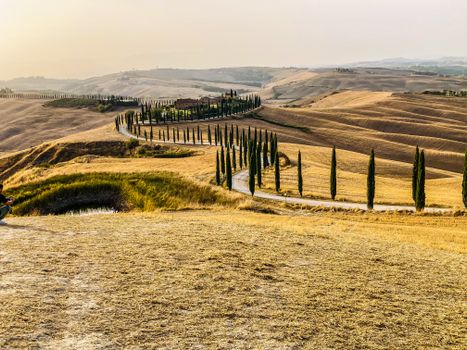
A scenic road winds through Tuscany's golden fields and cypress trees at sunset. Photo: Elia Pinzin / Pexels
Embarking on a two-week road trip through Italy is an unparalleled experience, offering the freedom to explore hidden gems and iconic landmarks at your own pace. The key to a successful journey begins long before you touch down in Rome or Milan: meticulous planning. For a car rental in Italy for two weeks, consider your itinerary first. Are you dreaming of rolling Tuscan hills, the dramatic Amalfi Coast, or the historical depths of Sicily? Each region presents unique driving conditions and vehicle requirements. For instance, navigating the narrow, winding roads of the Amalfi Coast might be more comfortable in a compact car, while a family exploring the vast landscapes of Puglia might prefer an SUV. Booking your car well in advance, especially during peak seasons like summer or early fall, is crucial. Not only does this secure better rates, but it also ensures availability of your preferred vehicle type, particularly if you require an automatic transmission, which is less common and often more expensive in Italy. Comparison websites are excellent tools for this initial research, allowing you to weigh options from various rental agencies. However, always check the direct websites of the rental companies as well, as they sometimes offer exclusive deals or better transparency regarding hidden fees. Pay close attention to pickup and drop-off locations. Opting for different locations can incur a one-way fee, which can significantly impact your budget. Weigh the convenience against the cost, especially if flying into one city and departing from another. Beyond the vehicle itself, think about your travel style. Do you prefer bustling city centers or tranquil countryside retreats? While a car offers flexibility, remember that driving and parking in major Italian cities like Florence, Rome, or Venice (which is car-free) can be challenging and costly due to ZTLs (Limited Traffic Zones) and expensive parking garages. For city exploration, consider parking on the outskirts and utilizing public transport. For countryside exploration, a car is indispensable. Factor in travel times between destinations; Italy’s diverse geography means that even short distances can take longer than expected due to mountainous terrain or winding coastal roads. A well-planned itinerary for your car rental Italy for two weeks will balance driving time with ample opportunities for sightseeing and relaxation, preventing burnout and maximizing enjoyment. Researching local driving customs and regulations will also set you up for a smoother journey. Understanding speed limits, toll roads, and parking rules upfront can save you from unexpected fines and stress. This proactive approach ensures your two-week Italian adventure is filled with joy, not logistical headaches. For more insights on navigating international travel, explore our international travel tips.

Understanding Insurance, Documentation, and Local Driving Laws

Stop sign with directional arrows at Lido di Noto, Sicily with sky backdrop. Photo: Carla Canepa / Pexels
Navigating the complexities of car rental insurance and Italian driving laws is paramount for a stress-free two-week trip. When you rent a car in Italy, basic third-party liability insurance (RCA) is usually included by law. However, this often comes with a high excess (deductible), meaning you'd be responsible for a significant portion of repair costs in case of damage or theft. For true peace of mind, especially for a two-week duration, investing in 'Zero Excess' or 'Full Coverage' insurance is highly recommended. This can be purchased directly from the rental company, through third-party providers (often cheaper), or sometimes included with premium credit cards. Always check your credit card benefits, as some offer primary car rental insurance that could save you hundreds of dollars. Be aware that third-party insurance policies typically require you to pay the rental company first, then claim reimbursement, which can be a lengthy process. Documentation is another critical area. For US citizens, an International Driving Permit (IDP) is legally required to drive in Italy, alongside your valid US driver's license. The IDP is essentially a translation of your license and can be obtained easily from AAA or AATA before your trip. It's valid for one year. Ensure your passport and the credit card used for booking (in the primary driver's name) are also readily available at pickup. Rental agencies are strict about these requirements. Failure to present an IDP can result in the rental company refusing to hand over the car, or worse, fines from Italian authorities if stopped. Italian driving laws have several nuances. Speed limits are generally 50 km/h in urban areas, 90 km/h on secondary roads, 110 km/h on main roads, and 130 km/h on autostrade (motorways). Pay attention to speed cameras, which are common and often unmarked. The most infamous aspect of Italian driving is the ZTL (Zona a Traffico Limitato), or Limited Traffic Zones. These are areas, typically in historic city centers, where vehicle access is restricted to residents or authorized vehicles during certain hours. Entering a ZTL without permission will result in a hefty fine, often issued months after your trip via mail. Look for signs with a white circle with a red border, often accompanied by specific hours. If your accommodation is within a ZTL, inquire with them about temporary access permits. Parking can also be challenging; blue lines indicate paid parking, white lines are free (often for residents), and yellow lines are restricted. Familiarize yourself with these rules to avoid costly mistakes and truly enjoy your car rental Italy for two weeks.

Our partners at Noleggio auto in Italia offer related services.

Picking Up Your Rental Car and Navigating Italian Roads

The moment you pick up your car sets the tone for your two-week Italian adventure. Upon arrival at the rental desk, have all your documents ready: your valid US driver's license, the International Driving Permit (IDP), your passport, and the credit card used for the booking. The rental agent will process your paperwork, and this is the time to clarify any last-minute questions about insurance, fuel policy (full-to-full is generally recommended), and any additional charges. Before you leave the rental lot, conduct a thorough inspection of the vehicle. Take photos or videos of any existing scratches, dents, or damage, both inside and out. Point these out to the rental agent and ensure they are noted on your rental agreement. This step is crucial to avoid being charged for pre-existing damage upon return. Check that the emergency kit, reflective vest, and warning triangle are present, as these are legally required in Italy. Once on the road, familiarize yourself with the car's controls, especially if it's an unfamiliar model or a manual transmission. Italian roads offer a mix of experiences. The autostrade (motorways) are efficient, well-maintained toll roads. You'll typically take a ticket upon entry and pay at the exit, either with cash or credit card (look for 'Carte' or 'Viacard' lanes). Be mindful of the 'Telepass' lanes, which are for automated payment systems and should be avoided unless you have one. Outside the autostrade, you'll encounter a network of state, provincial, and local roads, varying greatly in quality and width. Many charming villages are accessed via narrow, winding roads, so be prepared for slower speeds and careful driving. Roundabouts are common and follow the rule of yielding to traffic already in the roundabout. In general, Italian drivers can be assertive, but they are also skilled. Maintain awareness, anticipate movements, and use your indicators. GPS is invaluable; ensure your rental car has one, or use a reliable app like Google Maps or Waze on your smartphone. Download offline maps for areas with spotty reception. Remember the ZTLs mentioned earlier; these are often enforced by cameras, and fines can arrive weeks or months later. If you're staying in a city, ask your hotel about parking options and ZTL access. Parking outside city centers and using public transport for urban exploration is often the most sensible approach. For more details on safe driving practices, check out our guide to safe online shopping, which shares principles of caution and preparedness applicable to travel.

Essential Tips and Common Mistakes to Avoid When Renting a Car in Italy

To ensure your car rental Italy for two weeks is as smooth as possible, here are some essential tips and common pitfalls to steer clear of: * **Book an Automatic Early (If Needed):** Manual transmissions are standard in Italy. If you can't drive a stick shift, book an automatic well in advance, as they are fewer in number and command a higher price. * **Get an International Driving Permit (IDP):** This is non-negotiable for non-EU license holders. Without it, you risk fines and rental refusal. * **Understand Fuel Types:** Most cars in Italy run on 'Benzina' (petrol/gasoline) or 'Diesel.' Familiarize yourself with the correct fuel type for your rental car to avoid costly mistakes at the pump. * **Zero Excess Insurance is Your Friend:** While it adds to the upfront cost, it provides immense peace of mind. The narrow streets and aggressive parking can lead to minor scrapes, and a high deductible can quickly ruin your budget. * **Avoid ZTLs (Limited Traffic Zones):** These camera-enforced zones are in almost every historic Italian city center. Do not enter them unless your hotel has explicitly registered your license plate for temporary access. Fines are steep and arrive months later. * **Inspect the Car Thoroughly:** Before driving off, document any existing damage with photos or video. This protects you from being charged for damage you didn't cause. * **Don't Rely Solely on Street Parking in Cities:** Parking can be scarce, expensive, and subject to complex rules. Utilize parking garages or park on the outskirts and use public transport for city exploration. * **Factor in Tolls:** Italy's autostrade are toll roads. Budget for these costs, which can add up over two weeks. Have cash or a credit card ready for payment. * **Be Aware of Speed Cameras:** Italy has numerous speed cameras, both fixed and mobile. Pay attention to speed limits, especially in tunnels and near towns. * **Don't Leave Valuables in Sight:** As with any tourist destination, opportunistic theft can occur. Keep valuables out of sight or take them with you when leaving the car. * **Learn Basic Italian Road Signs:** While many are international, some are unique. A quick review of common Italian road signs will be very helpful. * **Consider a Smaller Car:** For navigating narrow village streets and tight parking spots, a compact car is often more practical than a large SUV. By keeping these tips in mind, your car rental Italy for two weeks will be a journey of discovery, not frustration.

Comparison

FeatureRental Company DirectOnline Broker (e.g., Rentalcars.com)Local Italian Agency
Price TransparencyGoodVariable (check fine print)Often less clear
Insurance OptionsClear, but expensiveGood third-party optionsLimited, potentially less coverage
Vehicle SelectionExcellentWide range, good comparisonsSmaller fleet, specific models
Customer ServiceDirect supportThrough broker, then directLocal, language barrier possible
Flexibility (Changes)Easier directCan be complex via brokerDepends on agency
IDP Requirement
Zero Excess Option✗ (often not offered)

What Readers Say

"Renting a car in Italy for two weeks was the best decision for our honeymoon. We used a compact car and explored Tuscany and Umbria, finding charming villages off the beaten path. The Zero Excess insurance was a lifesaver when we got a tiny scratch in a tight parking spot."

Sarah J. · Austin, TX

"Our family trip to Italy was transformed by having a rental car. We picked up in Rome and dropped off in Venice, covering so much ground. Make sure to get your IDP, it's truly essential and they checked it at the counter."

Mark D. · Chicago, IL

"I was nervous about driving in Italy, but after reading up on ZTLs and getting an automatic, our two-week journey through Puglia was incredible. We saved so much money on tours and had the freedom to stop wherever we wanted for photos."

Emily R. · Seattle, WA

"The car rental itself was smooth, but navigating the tolls and city parking was a bit of a learning curve. I wish I had downloaded offline maps beforehand, as cell service was spotty in some rural areas. Still, it was worth it for the freedom."

David L. · Boston, MA

"As a solo traveler, having a car for two weeks in Italy allowed me to explore at my own pace. I focused on the Dolomites and the Lake Como region, and the scenic drives were unforgettable. Just be prepared for narrow roads and confident local drivers!"

Jessica M. · Denver, CO

Frequently Asked Questions

Is an International Driving Permit (IDP) really necessary for car rental in Italy for two weeks?

Yes, absolutely. For non-EU license holders, an IDP is a legal requirement to drive in Italy. It serves as an official translation of your US driver's license. Rental agencies may refuse to provide the car without it, and you could face significant fines if stopped by Italian police.

What kind of insurance should I get for a two-week car rental in Italy?

While basic third-party liability is mandatory, 'Zero Excess' or 'Full Coverage' insurance is highly recommended. This eliminates or significantly reduces your financial liability for damages or theft, providing peace of mind against minor scrapes on narrow streets or parking incidents.

How do I avoid ZTL fines when driving a rental car in Italy?

The best way to avoid ZTL fines is to stay out of them. Look for signs indicating 'Zona a Traffico Limitato' (Limited Traffic Zone) with a red circle. If your accommodation is within a ZTL, contact them in advance; they may be able to register your license plate for temporary access. Otherwise, park outside the ZTL and use public transport or walk.

Is it cheaper to rent a car at the airport or in the city center in Italy?

Renting at the airport is often more convenient and can sometimes be cheaper due to higher competition. However, airport rentals typically incur an 'airport surcharge.' City center locations might be slightly more expensive but could save you the airport fee. Compare both options for your specific dates.

Should I book a manual or automatic transmission for my car rental in Italy?

Manual transmissions are standard and more readily available in Italy, often at a lower price. If you are comfortable driving a stick shift, this is usually the most economical and accessible option. If you prefer or require an automatic, book it well in advance, as they are less common and more expensive.

Who should consider car rental in Italy for two weeks?

Anyone looking for flexibility and the freedom to explore Italy beyond major cities will benefit. It's ideal for those wanting to visit rural areas like Tuscany, Puglia, or the Dolomites, or for travelers who prefer setting their own pace and discovering off-the-beaten-path destinations.

Are Italian roads safe for tourists to drive on?

Italian roads are generally safe, but they can be challenging due to narrow streets, aggressive driving styles, and complex rules like ZTLs. Staying alert, understanding local laws, and having good navigation (GPS) will ensure a safe and enjoyable driving experience.

What are the future trends in car rental for Italy?

Future trends include a greater emphasis on electric and hybrid vehicles, more seamless digital check-in and keyless access, and increased integration with smart city infrastructure to help navigate ZTLs and parking. Expect more personalized rental experiences and subscription-based models for longer-term rentals.

Ready to embark on an unforgettable journey? Secure your car rental Italy for two weeks today and unlock the unparalleled freedom of exploring Italy's breathtaking landscapes and charming towns at your own pace. Your Italian adventure awaits!

Topics: car rental Italy for two weeksrenting a car in ItalyItaly road tripdriving in ItalyItalian car hire tips
Leo List
Brampton weed
Adultwork